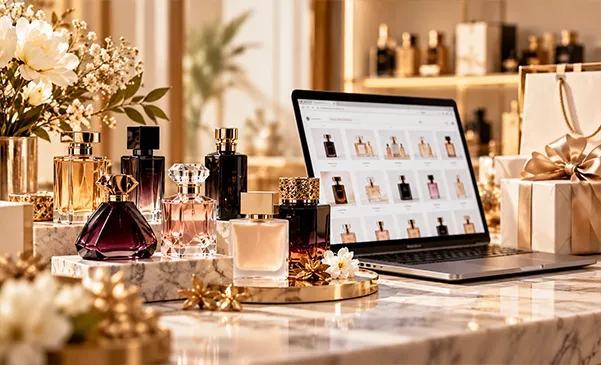
How to build a perfume assortment for an online store?

A good perfume assortment in an online store should not be a random collection of well-known brands. It should be a carefully planned offer that meets different customer needs. Store owners therefore need to consider not only bestsellers, but also category structure, product turnover and shopping convenience.
At Parfum Company, we work with online stores, boutiques and resellers that want to build their product range in a structured way. From experience, we know that a well-selected perfume assortment makes the offer more attractive, helps customers make purchasing decisions and reduces the risk of tying up capital in products that do not match the target audience.
Where to start when building a perfume assortment?
The first step is to define the target customer. Products should be selected differently for customers looking for well-known brands, for those interested in Arabian perfumes, and for shoppers looking for gifts at an affordable price. Without a clear strategy, it is easy to create an extensive but confusing product range.
To begin with, it is worth dividing products into several main groups. This structure helps customers navigate the store more easily and makes it easier for sellers to analyse sales and plan future orders.
- women's, men's and unisex perfumes,
- branded fragrances and options in lower price ranges,
- Arabian perfumes and oriental fragrances,
- gift sets for key shopping seasons,
- everyday fragrances as well as elegant and evening scents.
A store does not need to offer hundreds of products from the outset. It is better to build a smaller but well-structured range and expand it based on actual customer enquiries, seasonality and sales.
Branded perfumes, Arabian perfumes and alternatives – how to find the right balance?
One of the most common questions is what proportions to maintain between branded perfumes, Arabian perfumes and more affordable alternatives. There is no single model that works for every store, but it is worth ensuring that the offer is not one-sided. Customers have different budgets, varying levels of brand awareness and individual expectations when it comes to fragrance.
Branded perfumes build trust and attract customers looking for specific names. Arabian perfumes help differentiate the offer and respond to growing interest in intense, long-lasting and oriental fragrances. Alternatives, meanwhile, can attract customers looking for more affordable options.
A good approach is to base the offer on several product groups: bestsellers, versatile gift fragrances, distinctive new launches and products offering good value for money. Our range includes both classic perfumes and popular Arabic perfumes, which are increasingly finding their way into online stores and boutiques.
Bestsellers and products that make selling easier
Bestsellers are important because they reflect genuine demand. Customers do not always want to experiment – sometimes they are looking for a fragrance they know from reviews, social media, recommendations or previous purchases. For this reason, it is worth building part of the perfume assortment around recognisable products, while avoiding relying exclusively on them.
Versatile and distinctive fragrances that are easy to describe work particularly well online. Customers shopping online cannot test the product before purchasing, so they need clear information about whether a fragrance is fresh, sweet, elegant, oriental, light, suitable for evening wear, feminine, masculine or unisex.
It is also worth monitoring which products customers add to their baskets together. If a particular perfume sells well with cosmetics, for example, this may indicate an opportunity to expand that part of the range. Perfume gift sets are also a valuable addition, particularly during the festive season when many customers are looking for a ready-made gift idea.
How many variants and bottle sizes should you keep in stock?
Choosing the right bottle sizes can have a significant impact on sales. Larger bottles are usually chosen by customers who already know the fragrance or want better value per millilitre. Smaller sizes appeal to customers trying a new fragrance, looking for a lower-priced gift or buying perfume for their handbag or travel.
At the beginning, there is no need to build extensive stock levels for every variant. It is better to select larger sizes for products with the greatest sales potential. As a fragrance begins to sell consistently, availability can gradually be increased and additional variants introduced.
Perfumes should be organised not only by brand but also according to customer needs. Categories such as “gifts”, “everyday fragrances”, “sweet fragrances”, “fresh fragrances” or “Arabian perfumes” can shorten the path to purchase.
Margin and turnover – how to assess profitability?
The profitability of an assortment does not depend solely on margin. Product turnover – how quickly a product sells after being purchased for stock – is equally important. Sometimes a product with a lower margin but faster sales can be more profitable than a fragrance with a higher margin that remains in stock for a long time.
When analysing performance, it is worth considering several factors at the same time:
- how frequently a particular product sells,
- the number of customer enquiries about a particular brand or fragrance,
- seasonality, such as Christmas, Valentine's Day or Mother's Day,
- basket value and products purchased together,
- whether a particular product attracts new customers to the store.
A well-managed store should regularly assess which products generate consistent sales, which serve as complementary items and which merely appear attractive within the range. This allows purchasing decisions to be based on actual customer behaviour.
Where to source products? Perfume wholesalers and distributors
Choosing a supplier is one of the most important aspects of building a perfume store. A reliable perfume wholesaler should provide access to authentic products, a broad selection of brands, transparent terms of cooperation and purchasing options that can be adapted to the scale of the retailer's business.
For one store, the best solution may be traditional inventory purchasing; for another, gradually ordering smaller quantities; and for another, a dropshipping model. The key is to choose a perfume distributor that understands the needs of the e-commerce sector and enables retailers to expand their range flexibly.
Parfum Company operates as a wholesaler, distributor and strategic partner for retail chains, enabling store owners to adapt their purchasing model to their stage of development. For some, the priority will be building a broad inventory; for others, quickly testing different categories or expanding their store with new brands without taking on excessive risk at the outset. If you would like to learn more about our terms of cooperation, contact our team or register on the platform.
Perfumes for a boutique vs perfumes for an online store
Perfumes for a boutique are selected somewhat differently from an assortment for a large online store. In a boutique, customers often expect advice, direct contact with the product and a more selective range. In an online store, product descriptions, images, filters, categories, availability and brand recognition play a greater role.
This does not mean that the two models are completely different. Consistency is important in both cases. If a store positions itself as a destination for Arabian perfumes, its range should be clearly built around this category. If it mainly sells everyday fragrances or gifts, it is worth offering sets, versatile products and different price points.
One of the biggest mistakes is copying a competitor's assortment without analysing your own customers. What sells well in a large online perfumery will not necessarily work in a small boutique or store.
How to develop your assortment step by step?
Building an assortment should be treated as an ongoing process. The first order is only the starting point – it is the following weeks of sales that reveal which categories have the greatest potential. For this reason, it is worth analysing not only completed purchases but also customer enquiries, abandoned baskets and the most frequently viewed products.
A good approach is to expand the range gradually across clearly defined areas. You can start with bestsellers, then add Arabian fragrances, followed by gift sets, seasonal products and more niche compositions. This model allows the store to grow in a structured way.
Parfum Company is not only a product supplier but also a partner for stores that want to build their assortment strategically and grow sales of authentic perfumes and cosmetics. You can find out more about our business in the About us section.
FAQ – frequently asked questions
How many products should a perfume store offer when starting out?
There is no single number that is right for every store. At the beginning, it is better to choose a smaller, carefully planned assortment than to order a large number of random products. The range should include women's, men's and unisex perfumes, versatile gift fragrances, bestsellers and products across several price points.
Is it worth selling Arabian perfumes?
Arabian perfumes can be a valuable addition to the range because they attract customers looking for long-lasting, distinctive and less conventional fragrances. They are particularly well suited to customers interested in oriental, vanilla, amber, oud and gourmand compositions.
Which is better to sell: branded perfumes or alternatives?
A mixed assortment often works well. Branded perfumes build trust and meet the needs of customers searching for specific products. Alternatives can attract customers with smaller budgets. The important thing is to communicate clearly what type of product the customer is purchasing.
How do you start working with a perfume wholesaler?
First, define the store's profile, planned budget, sales model and the categories you want to include in the range. You can then contact a wholesaler to check the terms of cooperation, product availability and ordering options.
Do you need significant start-up capital to open a perfume store?
Not always. A store can start with a limited assortment and gradually expand it by analysing sales and customer interest. Cooperation models that allow retailers to test their range without making a very large initial investment in stock, such as dropshipping, can also be helpful.